
















We only deliver to Belgium, the Netherlands, Luxembourg and Germany, for orders to other countries, write to info@flexiqgames.com
The ability to adapt flexibly to change is an essential skill which you need every day. A skill you can start to practise from a very young age.
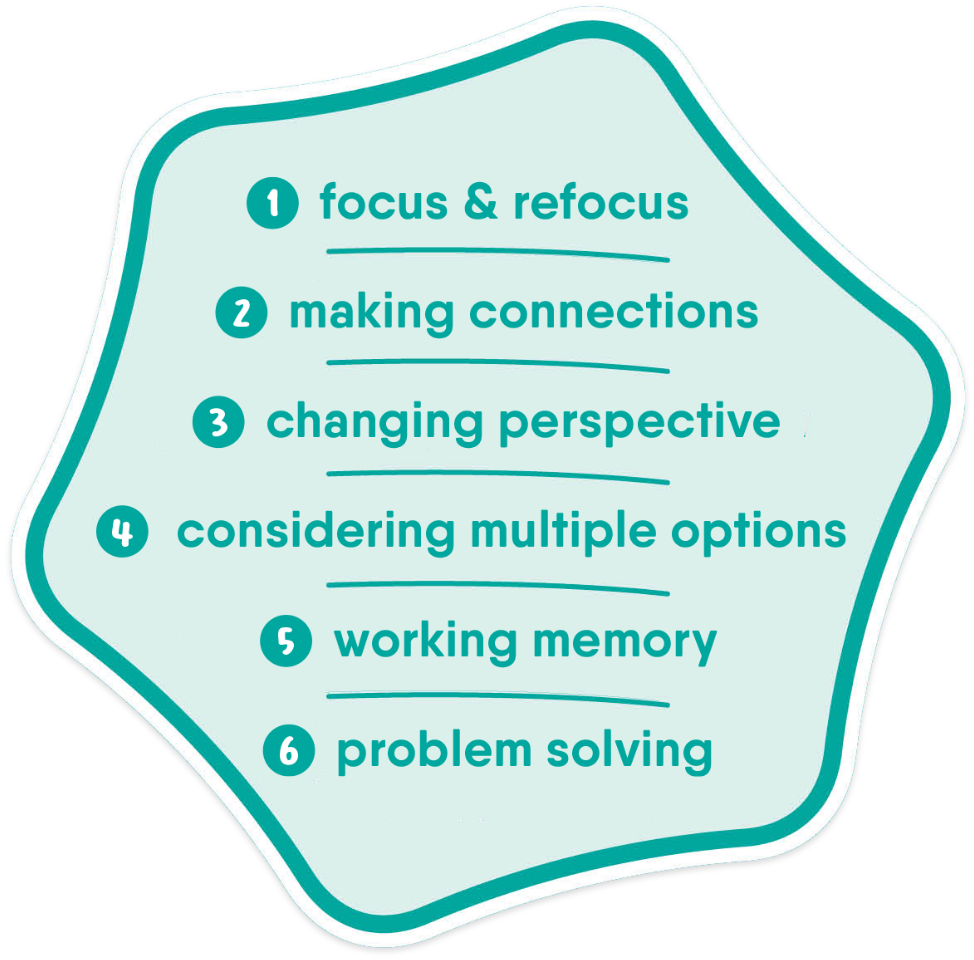
Our games help you to develop this ability, by focusing on the 6 components of adaptability, which are integrated in our fun, accessible and creative game mechanics.
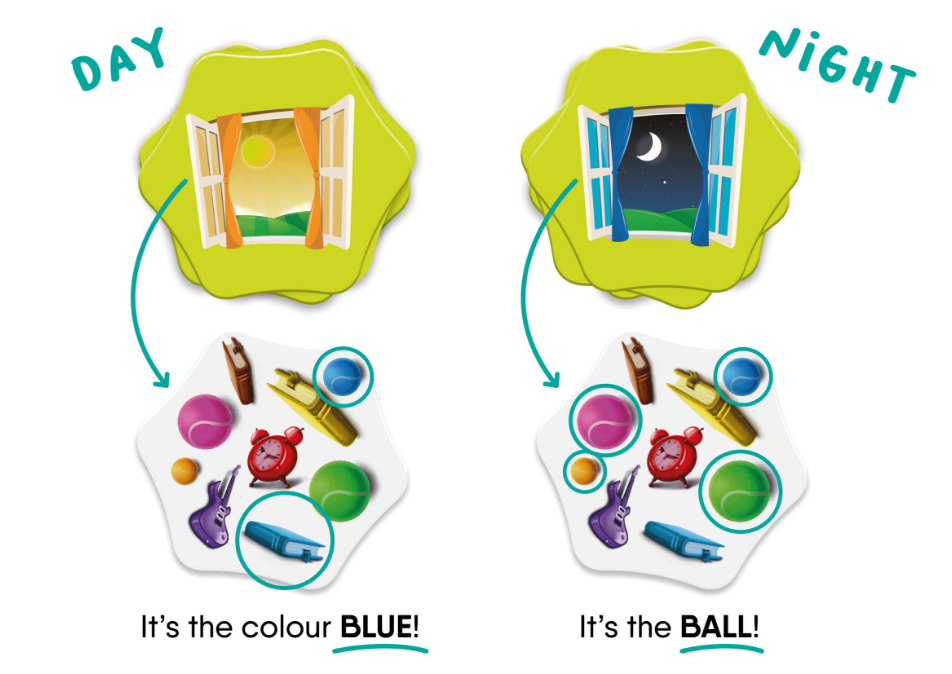
FlexiQ games teach you how to focus your attention on something (focus), but also that you can shift your attention to a new ‘point of interest’ (refocus). You need the ability to focus,, hold it and redirect it to a preset target everywhere: at school to learn something, in traffic, at work, when reading …
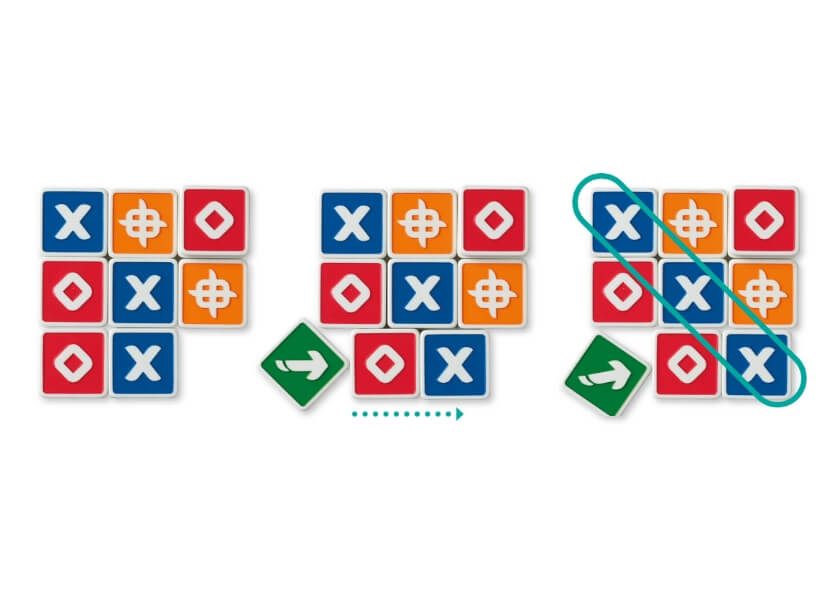
Creating links allows you to connect pieces of information to create new information or a bigger picture. You can combine things you see, hear, understand, remember, do or have to do to find new solutions or strategies. This allows you to adapt easier to new situations and to continue trying different and better solutions.
When solving problems or playing games, but also in your social life, you have to adapt constantly to different circumstances and starting points. Adaptability means adjusting your approach, your opinion or the way you look at things to get to different, more creative and more successful solutions.
You can’t always solve everything immediately. Trial and error often leads to nothing. A key element of adaptability is that you can come up with multiple options and can weigh these against each other. What works and what doesn’t? This is also something you need constantly in your professional, social and educational life.
Your working memory is a powerful function in your brain which allows you to hold onto pieces of information, observations or things from your long term memory long enough to do with them what you wanted to achieve. Expand the volume of your RAM-memory in your head with the games from FlexiQ.
Problem solving is more than just coming up with a solution. It requires creative thinking, considering possibilities, reasoning, building potential strategies and logical thinking to solve complex issues or questions. Whether at home, work or school, you do this in steps which all have a part to play in the solution.
Besides the 6 FlexiQ-skills, you can also practise several other important core skills with our games. Filter the skills below which you want to improve and immediately find your ideal game.
Perception rate (Processing speed).
How quickly do you notice something?
Do you immediately spot similarities or differences?
And do you immediately filter out unnecessary information?
Then you have a good perception speed!
This helps you in everyday life to perceive essential stimuli.
From word recognition to assessing risky traffic situations, with quick perception you will not be taken by surprise.
Reaction speed
The better your reaction time, the faster your motor response to certain stimuli.
That can help you outpace your opponents during games.
Reaction speed is also important in everyday life.
Of vital importance even.
Think of suddenly stopping for an approaching car when you want to cross the street.
Thinking ahead / anticipating
Train your forethought and be one step ahead of every situation.
Always know what to do when an event occurs, even before it happens.
Very useful for winning games, but also for giving correct answers to questions at school or reacting appropriately in a variety of social contexts.
Adaptation strategy / adaptability
With flexible adaptability, you easily adjust your plans or strategy.
Do the rules of the game change?
Do unexpected obstacles come your way?
No problem.
You immediately see other paths, opportunities and strategies to reach your goal.
In playful situations, but also in the changeable situations of life.
Risk taking / Daring
With a healthy dose of courage, you do not shy away from risks, without acting rashly in the process.
You can assess both positive and negative risks, and have the courage to take initiatives whose outcome you cannot predict with complete certainty.
You park uncertainties in order to go full steam ahead.
Visual perception / Visual perception
Do your eyes see what others don’t immediately see?
With good visual perception, you puzzle together everything you see into a logical whole.
You recognize meaningful elements and see important details.
You read, calculate, see connections and come to conclusions based on the visual information you gather.
Adaptive planning
Adaptive planning is all about adapting strategies flexibly when circumstances change.
In these games, you learn to shift gears quickly and adapt your plan to achieve your goal.
It develops your ability to find creative solutions in dynamic situations.
Memory
Memory is essential for remembering and applying information in new situations.
In these games, you train your ability to quickly remember, store and use what you have previously learned.
This strengthens your memory and helps you perform better in both everyday and challenging tasks.
People with a high level of adaptability tend to be open to experimenting? Adaptability = being open to trying new ideas. A flexible thinker doesn’t often say: “Let’s do it like this, because we have always done it that way.”
